
For this part of my project, I am going to focus on the theme of Urban Impressions, after experimenting with long exposure and reflections, I now want to use photographers like Saul Leiter to combine my different experiences to create a series of photographs influenced by Leiter’s painterly style. Refining my photographs by experimenting with different seasons and weathers, using the texture of bus stop windows to allow light to pass through, creating a painterly effect. Whilst looking at Saul Leiter, I will also look at Night street photography, particularly at the contrast between neon lights and the night sky. To gain inspiration, I will look at photographer Liam Wong, along with Neon Noir, who both focus on Drawing out the Bright and Neon lights. I will complete this as further experimentation and help improve my Abstract photography.
Saul Leiter

It was really nice to be able to use the book to gain information and insight into the context behind Saul Leiter and his approaches toward street photography. I was able to understand the reasons why he decided to move to the chaotic life of New York City, and how this has influenced the styles and techniques of how he composes his shots.
I am looking at Leiter to help develop my street photography into a more painterly abstract feel. I think the ‘Painterly feel’ shown by his photographs will allow me to use similar objects as barriers, using different weather patterns and scuffs
Context

Son of well-known Talmud scholar and rabbi Wolf Leiter, Saul Leiter was known for his contemporary and pioneering work throughout the 1940’s and 1950’s, particularly towards his use of colour within his photography. Many people described his work as paintings made with a camera He was an important figure throughout the mid 90’s.
The Artistic Photography of Saul Leiter
This is a video, explaining his photography style and techniques, early life and how his photography career has changed over the years.
Notes from the video
His photographs are described as paintings made with a camera
Was never encouraged to pursue a career in the arts or photography
when he moved to New York in the 1940's, his choice was not supported by his father who was a rabbi and disapproved of his decision, as he aspired for his son to work in the same occupation as him.
His painting teacher introduced him to the art of photography
he often used a 150 mm lens to capture his shots
He used a lot of expired film, particularly when shooting colour film which uniquely captures colour .
he had an unorthodox way of thinking about composition
His photos aren't a representation of a time or space or event, its more like an impression.
He only started making photographs in colour in the 1940's, then letting the world know about his work in and rediscovering prints in the 1990's
By 1948 using an expired Kodachrome 25 mm film, he started experimenting with the use of colour. Particularly interested in city life and the people who surrounded him.
Canon A1, Leica CL, Minox EL, Olympus XA,

"I spent a great deal of my life being ignored, and I was always very happy that way, being ignored is a great privilege, that is how I think I learnt to see what others do not see, and to react to situations differently, I simply looked at the world not really prepared for anything"
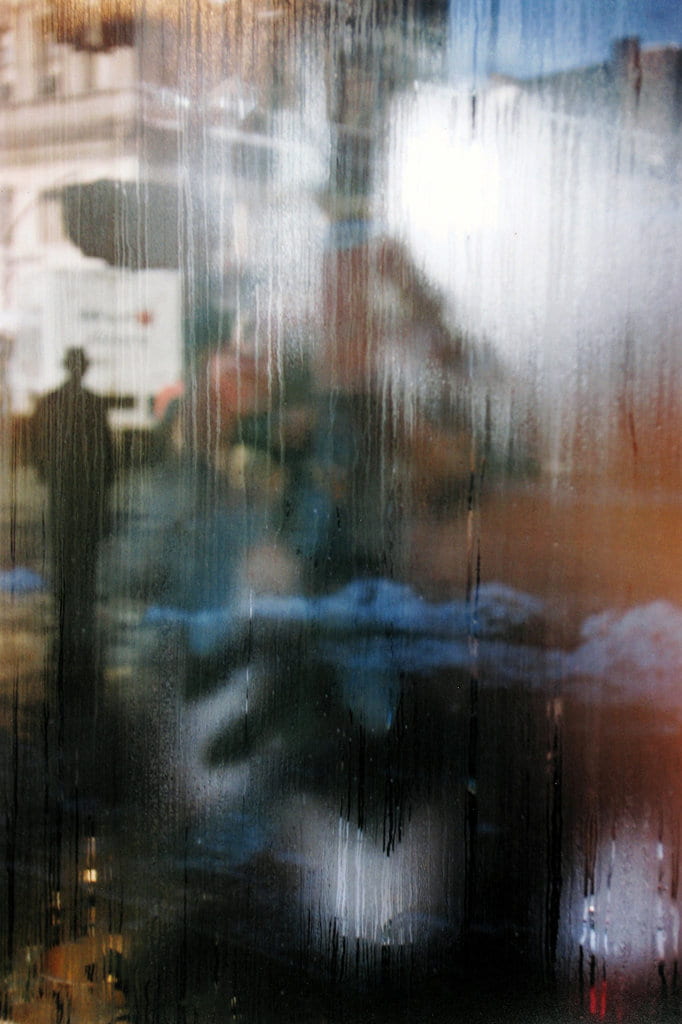
After watching the video summarising Saul Leiter’s photographic styles and techniques, I now know that many people describe his photograph outcomes as paintings made with a camera. He often uses objects like windows in conditions such as rain and snow for the foreground which creates a more whimsical effect, allowing for a painterly outcome. I think that the painterly effect he creates will help me when I make my own photographs, by creating an abstract and unique effect caused by the different barriers. I think that by taking his painterly style from his work and using it into mine, will draw out these photos as this is a very unique style of photography not usually seen much.
Photojournalist Inspiration
Although he spent the majority of his upbringing in the city of Pittsburgh, in his early adulthood, wanting to escape the family traditions and wishes, he left on a plane to New York, saying he never wanted to live anywhere else. This is where he spend his career, recording different places and people, throughout a long period of time. Capturing the zest of a city through the daily life of the pedestrians in New York. I think just his ability to create a painterly effect and outcome makes him stand out from other photographers his use of obstructions allows for this to happen. He really thinks about how and where he wants to compose his shot, always ensuring that there is something that can make the result more whimsical and painterly like.
Early Monochrome

Although many people today know Leiter for his brightly coloured, painterly-style street photographs. Throughout his early career, he focussed on using monochrome. one of the people who inspired him most during this aspect of his career was American photojournalist W. Eugene Smith
He took a series of monochrome photographs using a 35mm Leica. Although in his early career, he photographed in monochrome, he often used framing and definite shapes when composing his shots. A lot of the time using objects as the foreground such as textured windows, is a clear form of abstract expressionism.


After experimenting in black and white, in 1948, he decided to transition from monochrome to colour photograph After experimenting in colour, he started creating connections with other famous contemporary photographs like; Diane Arbus and Robert Frank. During the 1940s and 50s he helped set up the New York School of Photographers.
“I happen to believe in the beauty of simple things. I believe that the most uninteresting thing can be very interesting.”
Saul Leiter
Visual Style

Response to Leiter
I like the use of framing within this outcome as it draws the eyes of viewers towards the blue cars. The fence framing is a key similarity to Leiter’s work creating three dimensions by having the fence as the foreground, the plants as the middle ground, and the cars as the background, which is a key way of making abstract photography. Although the use of framing and different layers and dimensions are similar to Leiter’s style, however Saul Leiter particularly focuses on warmer colours like; Red, Orange, and Yellow. After I experimented with warmer colours, I wanted to move on to cooler colours as a point of comparison.

Inspired by Abstract Expressionism
Abstract expressionism is an art movement which became evident in America and became an influential part of the American art world throughout the 1950s. It is known to be one of the first American movements that has attained global domination. Abstract expressionist artists often incorporate bright colours using brush strokes to create organic lines and forms, leading to abstract shapes and outcomes.
It is often considered the first specifically American movement to achieve international influence. Abstract Expressionism is characterized by a focus on spontaneous, gestural, and non-representational forms of expression.
Leiter has always had a passion for painting and was fortunate enough to meet famous Abstract Expressionist painter Richard Pousette-Dart. Who also enjoys working with bright, happy colours in his work

It is easy to tell the similarities between Lietre and Pousette-Dart. Leiter uses a textured window, and the weather being rainy, allows the colour to fade, which creates a painterly style. Whereas Pousette-Dart uses bright-coloured paintings. However, you can see by both the outcomes, a similarity between the two. Leiter’s use of raindrops creates a similarity to the patches and coloured circles spotted throughout his work. They both like to use bright colours like red and yellow, which also allows the viewer to notice the links between these two artists. In a photo, it is often hard to create texture, however, Leiter’s use of raindrops provides its own form of texture which also bonds with Pousette-Dart.


Painterly Abstract Street Photography Analysis
Here are a few famous photos taken by Saul Leiter, you can tell that the way he composes his shots, is very similar to other forms of art such as paintings, his outcomes are a clear representation of Abstract expressionism. Mainly by using different foreground objects such as windows, framing, and cars. These outcomes all have resembling features to Abstract expressionism, for example, the use of bright colours, the use of obstructive objects, and the creation of texture like the raindrops formed on the windows. The use of windows allows for a painterly result, especially the use of different weather patterns and reflections. I hope to use his outcomes as inspiration to create my own using objects like windows, cars, and bins to create abstract expressionism.

Connection With Ernst Haas, Another Abstract Street Photographer
It is easy to make connections between Haas (who I looked at earlier in my project) and Leiter’s styles and techniques. Ernst Haas like Leiter is an Abstract street photographer who often draws out the broad and bright colours of city life. Haas is best known for his use of long exposure within his outcomes, drawing out the typical city palette to create further abstraction within his photoshoots, however, has also previously composed some photos that although lack motion blur, create their own style of abstraction.


Connections – Ernst Haas

As previously mentioned, Haas often uses long exposure to create abstraction. He also uses a combination of motion blur and broad colours to create a painterly feel. However, has throughout his career also used other unique qualities to compose abstract shots, for example; Barriers and Reflections (Like water and windows).
In this particular outcome, Haas uses reflections as a form of abstraction, and although it is difficult to notice, Ernst Haas has also rotated the image to create further abstraction.
Whilst Saul Leiter doesn’t officially use a long exposure, the way in which he composes his shots allows his photographs to have a painterly feel (caused by the use of barriers such as windows) therefore looking like motion blur or the strokes of paintings
Whilst being able to see an overlap between their outcomes and how their unique photographic techniques and styles create broad brushstrokes of colour leading to a painterly effect, for example their use of barriers to obscure the outcome of the image and to create abstraction. Or the way they both draw out pops of bright colours to contrast it to its surroundings. Haas and Leiter are two very different photographers, this is not only identifiable in their outcomes, but also their individual processes and methods towards making their photo shoots.
Visual analysis and comparison of Saul Leiter and Ernst Haas
Although they both use incorporate street furniture such as barriers like windows, the way in which Haas composes his shots (busier location, different dimensions), his outcomes are often more complicated and difficult to comprehend on what is happening in the photograph. His photographs are often quite busy and fill the whole photograph, whereas with Saul Leiter, he often creates his outcomes with one main subject, which creates more minimalist compositions. Despite both photographers composing their photo shoots within city settings, Haas regularly captured his photographs in more busier outlooks and areas which in the outcome, creates different dimensions and a deep depth of field. This shows his willingness to be ore experimental when taking street photographs. However, as seen in many of his outcomes, Leiter prefers to use a calmer area location where he can spot the perfect shot without being easily spotted.


After understanding the different approaches towards abstract street photography, and comparing the work of two unique photographers, I have learnt about the different ways in which you can create abstraction through minimalist objects, drawing out colours and interesting aspects of a city to compose an interesting and less mundane shot. I am now inspired to use similar methods and when creating a photo shoot, adapting my abstract street photography style by using a variety of different street furniture such as windows and Bus Stops to create an artistic-looking painting.
Nick Turpin – On the Night Bus
British street photographer Nick Turpin is most famous for his candid street photography, capturing the busy lives of Londoners; commuters and tourists. For his Night Bus series he spent two years secretly capturing London’s night bus riders.
“Throughout two cold and frosty winters, Nick Turpin continuously went around London capturing the nightlife of commuters “ON THE NIGHT BUS” through windows of condensation and raindrops taking in the life of many people within a small place yet separated by their emotions and feelings”
HUCK MAGAZINE
The Elephant and Castel Roundabout

It is no surprise that Nick Turpin was particularly fond of using the Elephant and Castle roundabout as his prime location for capturing these unique shots, its regular occurrence of several buses, allowed Turpin to gain different perspectives from different buses, using different textured windows and human expressions to create a series of unique snd abstract photographs.
“Elephant and Castle roundabout, It became something of a second home to Nick Turpin”
Huck magazine


Visual Analysis

Because there is a lack of background cropped into the frame, and the main focal point is the emotions created by the commuters and tourists. I think that the most probable lens that Turpin used, would have been an 85mm lens. This is different to Leiter and Haas, who prefer to have the background characteristics to compare it to the pops of colour. This use of this type of lens allows the photographer to capture details up close, without having any background features interrupting the shot. Haas and Leiter also always shot during the day, whereas Turpin preferred to capture his shots, throughout the night, using the lack of natural daylight to contrast with the artificial and bright colours projected from the bus. While using the textured windows to create further abstraction enabling him to create painterly outcomes. When analysing his work, I was contemplating the angle at which he positioned himself when creating this photo shoot. However, it is clear that Turpin went around the different buses parked at the roundabout and stood on the outside to capture the emotions displayed on the people’s faces.
Takeaway Point
I think after gaining inspiration from Huck magazine on his reasoning for this way of street photography, I am now inspired to create similar outcomes influenced by Turpin’s unique photography style and techniques. Particularly experimenting at night-time to allow the bright colours to contrast with the lack of daylight. I am pleased that I found Nick Turpin’s work as it allowed me to gain inspiration with not only photographs during the daytime created by the likes of saul Leiter and Ernst Haas but also at night. I hope to now combine the knowledge I have to create photographs responding to these photographers.
Bus Stop
Now I have further knowledge of using textured windows such as bus stops within street photography to create abstraction, I hope to combine my understanding to create abstract shots through textured windows. I will try to capture the pops of colour not only during the day but also at night while using these obscure windows to create a painterly feel like Saul Leiter and Nick Turpin.
Responding to Saul Leiter, Ernst Haas, and Nick Turpin
I am looking at Saul Leiter and his photographs are described as painterly, so as a response to his work, I wanted to use framing and windows to create painterly abstract photographs, inspired by Saul Leiter.
Impressionist Chislehurst
I wanted to respond to his Painterly photographs. So I went to Chislehurst and used bus stop windows and telephone box windows using writing and texture to create a painted effect. The windows consist of lots of scuffs, so therefore create a painterly and whimsical effect. Although there isn’t a framing around the whole image, I wanted to replicate Leiter’s outcomes by using natural framing of part of the bus stop to create abstraction. When taking his photographs he likes to draw out the bright colours in comparison to the city-scape palette. He also uses weather patterns like raindrops and fog whilst reflecting these through reflections to create abstraction.
I am pleased with these outcomes, as I think the use of textured windows and drawing out the pops of colour shows a similarity between my work and Leiter’s work. I wanted to experiment with using natural framing and without so I could create a comparison between the two. I used a slow shutter speed and really focused on the composition of colour to create abstraction and similarities to the photographs I have drawn most of my inspiration. Whilst being influenced by the style and techniques of different artists, I also wanted to use my own unique styles within my outcome. For example, I decided for this photo shoot, I didn’t incorporate any people in it as I wanted to focus on getting the settings right drawing out the colour from the composition, and taking advantage of the available light, this was particularly important at night as there is only a certain amount of light produced.


This outcome was taken behind a bus stop at night time, looking through the window to capture the surrounding light passing through. I particularly like this one as the textured window improves the sense of abstraction allowing the photograph to be more painterly-like. whilst relating back to Saul Leiter’s work by capturing light through textured objects such as windows.?
Lightroom – Colour Grading
I will now experiment with colour grading to see which grading works better with my abstract street photography style. I will develop my photographs by editing my outcomes, particularly focusing on altering the midtones, Shadows, and Highlights. This editing process will allow me to create different colour grading styles which improves the sense of being “Painterly” as the addition of warm and cold colours focuses on the foreground window and the marks, scratches, and markings
Warm Colour Grading

I used the colour grading tool in Lightroom to make the colours richer, allowing the surrounding night environment to contrast with the rich colours, projected by the lights, the outcome of this collection, created a warm effect. To create further abstraction, during my editing process, I wanted to use colour grading to tint the shadows using warmer colours like red, whilst contrasting the highlights to a comparatively cooler colour like blue.

Although I think this was a good experiment, when analysing it, I think that when colour grading, the highlights and shadows could’ve been pushed a bit too much, so can look too artificial. So, to improve, when colour grading and editing my outcomes, I will tone down the addition of extra colours. For this outcome, I decided to create a result with a less distracting effect. by adding green tints to the shadows to create a more natural look.

Cool Colour Grading
As a comparison to the Warm collection, I wanted to experiment with using colour grading to create a cool effect, using cooler colours like green and blue, contrasting to the foreground window or bin outline.


Although with the human eye, it is really difficult to see through these textured windows, when bright-coloured cars or lights pass by the combination of the two, creates a well-composed, abstract street photograph.


I have decided that the cooler colours work better as the reds stand out more on the cooler green shadows
Scratched Glass
Using textured windows as a foreground is a great way to provide abstraction whilst also having further objects in the background. Even though the middle ground and Background are both out of focus, the use of bright colours can be a way of bringing the photo to life. Whilst this series of photographs have similarities like; the use of windows to create layers. I have also used my own style to create my own abstraction, for example; the use of scuffs and marks on the window, also I decided for this set of photographs, I wanted to experiment without framing, therefore cropping in natural framing.


Stickers on Glass
Although the books in the background are at a shallow depth of field, the common use of colours creates abstraction whilst focussing on the blurred foreground windows.


Bus stop


Reflection and Refinement
Using Condensation
After experimenting with different physical textured windows, I wanted to use condensation as a form of abstraction and to also respond to Leiter’s idea of creating painterly-like outcomes. I liked experimenting with colour grading, so I wanted to present my refinements separately, grouping them into warmer and cooler outcomes.
Cool


Warm


Water droplets


Outcome
I have decided that because I am making a book for my personal investigation outcome, I wanted to create a grid collage containing all of my favourite outcomes from this section of my project. I love the richness of colour ranging from warmer and cooler shades. To create abstraction, I often used a window either textured or covered with condensation. This also allowed me to respond to Saul Leiter’s aim of creating outcomes that look like paintings

Project evaluation
Throughout this project, I have been experimenting with how using windows can create further abstraction within street photography, whilst testing different colour gradings, to contrast the different outcomes created using cooler and warmer styles. I decided to research Saul Leiter for my inspiration as I really like his composition of colour his unique styles and techniques and how he likes to create abstraction. My favourite aspect of his work was his ability to create painterly style outcomes which resemble brush strokes. After understanding more about him, I wanted to create my own outcomes that were influenced by his style. Hoping to use textured windows to create painterly results. Through my research, I also found Nick Turpin who is an abstract street photographer and is particularly known for continuously going around London capturing the nightlife of commuters “ON THE NIGHT BUS”, using windows of condensation and raindrops taking in the life of many people within a small place yet separated by their emotions and feelings”. Although my final photoshoot didn’t include people, I thought that it would be good to combine both styles to create a photoshoot, with the idea that for the overall final piece, I will use my Urban Impressions photoshoots, in my outcome