The city is a mass of glass and metal. I’ve always wondered what happens beyond where I am. I always think about what is going on inside a person’s head. Lots of city dwellers whether that’s commuters, workers, or visitors experience the essence of a city looking through windows, such as; transport and work offices. The focus for this series of photographs is to utilize a selection of windows to capture the way people understand the “Life of a city” Key inspiration comes from Lee Friedlander, Monaris and whose photography often uses reflections to capture the disorienting nature of living in a city.
View From a Train Window
For my first response to ‘Life through a Window,’ I simply wanted to capture commuters from inside a train. The train window separated me from the outside world. I wanted to use the window of the train as a layer, using different dimensions as a way to create abstraction, and the use of monochrome allows me to draw out the emotions these commuters give off. When taking this selection of photos, I had many different feelings, and understandings of the reality of commuters.


Now I have a greater understanding of the use of windows to create abstraction using dimensions. I hope to refine my photographs by comparing the effect the use of framing gives off in comparison to a slick window, projecting the outside world, with a lack of framing to obstruct the image. I also hope to use objects in front of me and beyond the glass to create dimensions.
Window Reflection Experiments
Using reflections is another way of capturing the life of a city by using windows to create reflections of the surrounding landscape whilst being able to see the inside of a shop or building. Using reflections also distorts the picture, which creates a surreal effect. The windows in Farringtons have provided me with some opportunities to experiment with reflections. I want to experiment by using frames that categorize the images into sections, whilst also capturing pictures without frames, which allows a uniform flow through the photographs.
With Frames
I wanted to experiment with reflections using window frames. the use of frames breaks up the image.


Without Frame
Capturing reflections without distinct outlines excludes any interruptions created by the frames. So in order to create this, I focussed the lens so it is zoomed in on the centre of a window, excluding the frames.

After experimenting with life through a window, I managed to capture a series of reflections, and from there I chose my favourite one.
I particularly like this outcome as there is so much to look at, many things have been reflected from the outside. Although from this angle, it’s difficult to determine which aspects have been reflected.

I chose this photograph as the outcome because I was fascinated by the layering in this picture. I used Lightroom as an editing source, converting the picture to black and white makes you focus more on the formal elements of the photograph.
Outcome

Without Frame Refinements
After further experimentation, I decided that my favourite outcomes were without frames as I felt that the frames obstructed the rest of the picture, So to improve my reflection, I wanted to refine my photographs making sure that there wasn’t any framing obstructing the image.


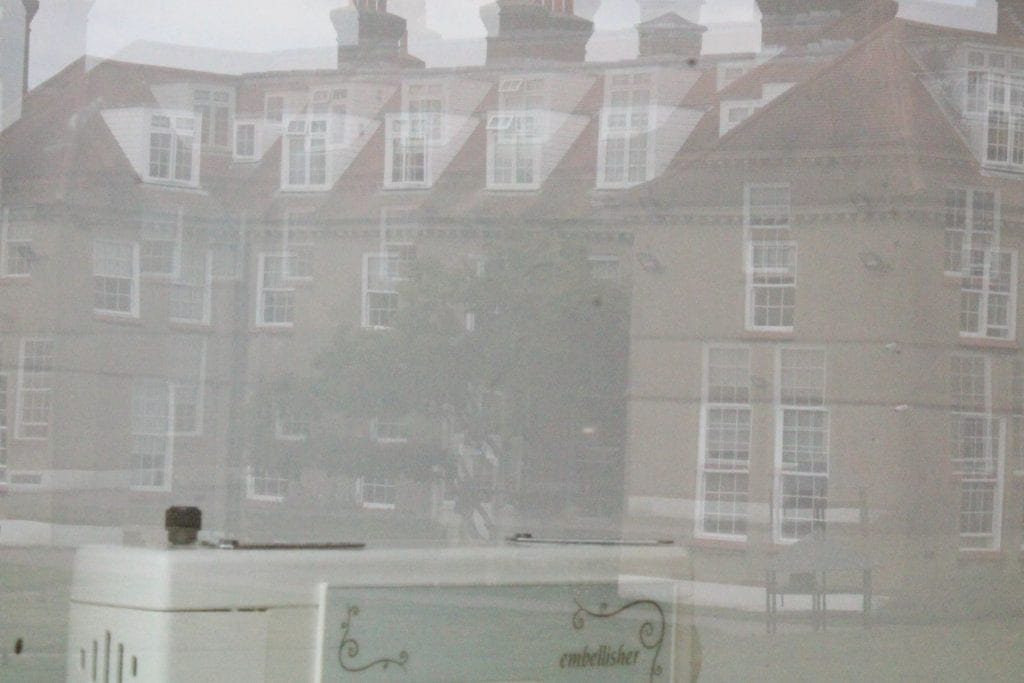


Experimenting in Monochrome
After understanding more about reflections, I wanted to experiment with the outcomes I created, By editing them into Black and White. This uses tones of a single colour to colourize a photograph. Instead of having colours from all over the spectrum, which can occasionally disrupt a photograph


Reflection
I have experimented with reflections, by using framing and objects to create abstraction, my knowledge of reflections has improved which has enabled me to create outcomes, adding improvements each time.
Lee Friedlander

American photographer Lee Friedlander is best known for his reflection creations of urban landscapes captured throughout anonymous cities. They all contain different aspects of an average city, for example; Windows, buildings, fences, billboards, posters, cars, and many other typical urban features. Friedlander categorizes his photographs by incorporating windows and framing which allows the windows to reflect the cityscape around him.
Throughout his working career, his photographs have been exhibited in many well-known galleries and museums around the world, whilst being an award winner for countless awards.
Icontenttv – Documentary
Here are some insights into Friedlander’s approach from watching the documentary

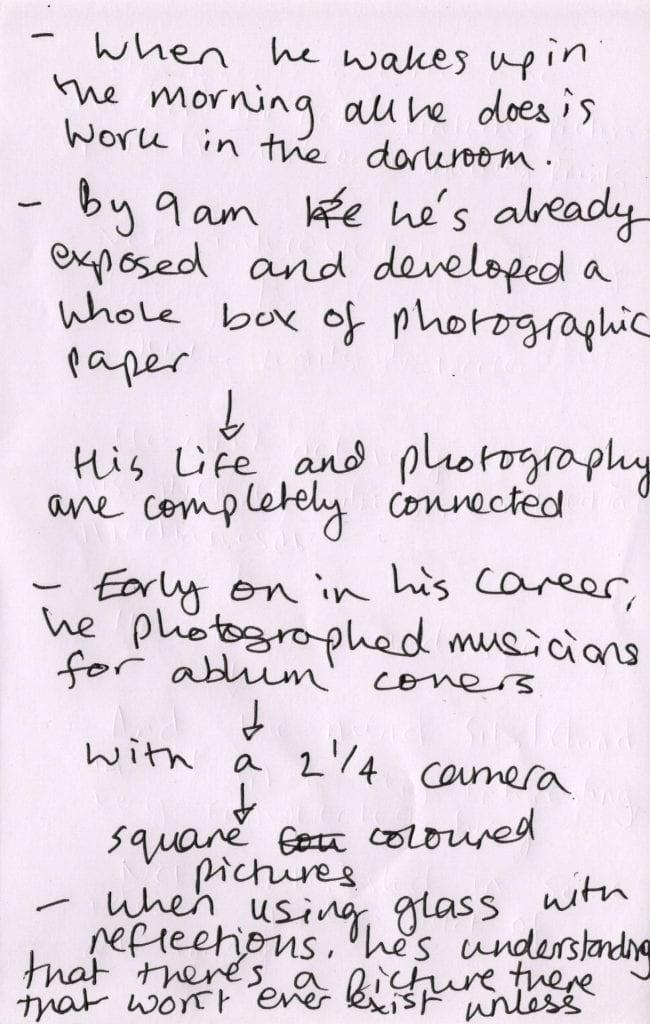

Connections to My Project
After previous experimentation with capturing the essence of a place through windows and reflections, I have chosen to research Friedlander because I felt that his use of Juxtaposition and layers incorporated in his work ended with a similar outcome to mine, also the majority of his photographs did not contain any framing to section his photographs, or the use of colour, which can obstruct an interesting picture, for example bright colours or lines, this also attracted me to his artistic creations as I love the idea of creating an image with a clear flow. I was particularly inspired by his ability to capture these well-presented photographs unaware of what the outcome would look like, and only using his small pocket camera (Leica 35-mm camera).
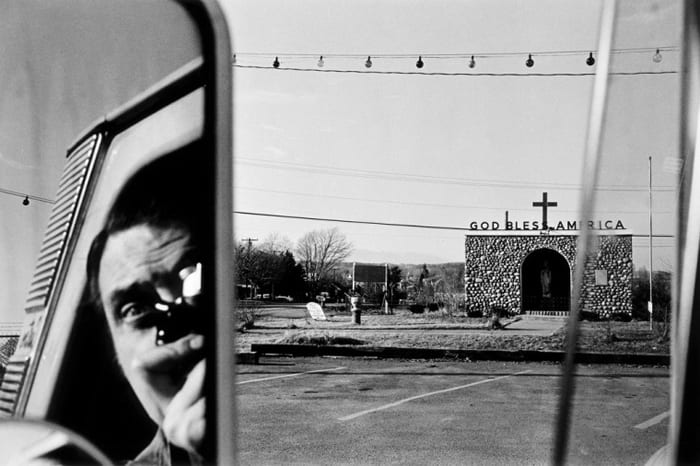

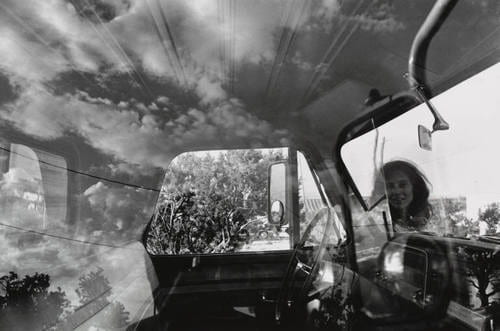

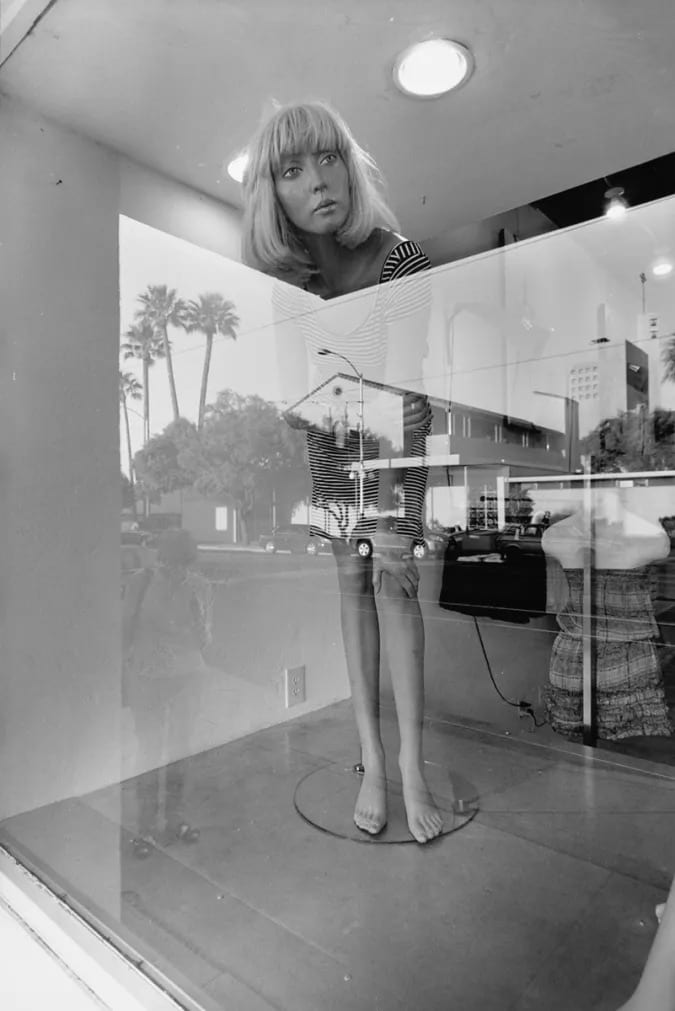
I suspect it is for one’s self-interest that one looks at one’s surroundings and one’s self. This search is personally born and is indeed my reason and motive for making photographs
Lee Friedlander
There were many quotes about Lee Friedlander’s work that I could have used, however, this one particularly interested me. I think many street photographers like to use their surroundings and even themselves to create an abstract shot, like him and many other street photographers, I use “One’s surroundings” as an influential part of my street photography, often using “One’s self” as the central object of the photograph, capturing the zest of a city through reflections and abstraction. This quote has allowed me to understand my approach towards street photography with greater knowledge.
Visual and critical analysis

- Self-Portrait: Friedlander often incorporates himself within his photographs, which means that he positions himself opposite the subject.
- Urban Landscape: He uses urban landscapes as an inspiration for his reflection shots.
- Distortion and Abstraction: Friedlander is inspired by the life of a city and this inspires him to create abstract photographs using reflections
- Juxtaposition and Layering: Friedlander uses framing to create layering and his photos and uses juxtaposition by incorporating the life behind him and in front of him, within one image.
Visual Comparisons Between Friedlander and Monaris

Monaris (Paola Franqui)
Adobe Lightroom partner and Sony Ambassador Monaris (Paola Franqui) is a Puerto Rican photographer. Her most famous work is of movie-like cityscapes, using her admiration for narratives and the art of photography, she used her artistic methods based off of the use of colour and composition to transform minimalistic cityscapes into a series of stories.
Just like Friedlander, Monaris’ (Paola Franqui) work consists of reflections through windows. As can be seen in my Venn Diagram below, there is a variety of similarities. Her compositions exclude the frames of windows and the careful blending of the interior and exteriors to create an abstract picture
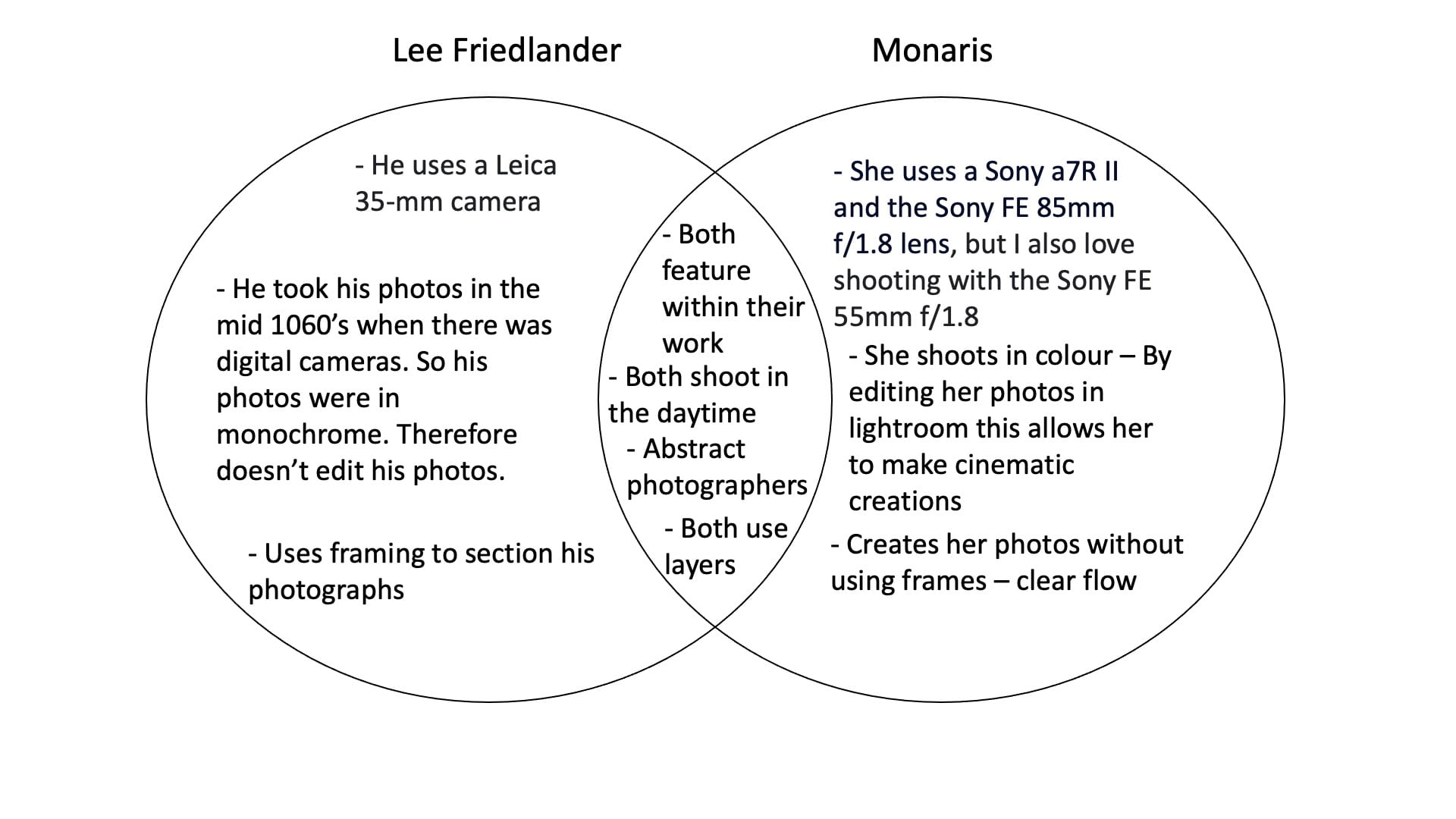
Unlike Friedlander, Monaris admires the editing process to create movie-like outcomes using the likes of Lightroom. The privilege of being an ambassador for Lightroom allows her to use this source whilst editing her photographs, experimenting with different editing techniques and final outcomes.
There are distinctive details which separate the two photographers.
Monaris’ photos


Visual Analysis

Black and white vs Colour
Friedlander’s black-and-white photographs create an old-fashioned effect caused by the lack of colour. The use of monochrome makes it harder to identify what is going on within the photograph as the lack of a colour palette makes it difficult to understand what is being reflected in comparison to what is seen through a window. On the other hand, the use of colour creates an association with emotions, allowing us to understand the different aspects of the picture. The use of a palette enables you to contrast the different ideas portrayed by the image.
I think that when in the process of a street photography photoshoot using monochrome creates more of an abstraction than using colour, as the use of reflections creates a distortion because of the lack of colour. Experimenting with street photography in colour is also abstract however the outcomes are easily identifiable in what they are and the impression they give off.


Focal Lengths
A key difference between the styles Of Friedlander and Monaris is their use of focal lengths. Friedlander often used a fairly wide 35mm lenses which created a wider field of view incorporating a significant amount of background. The lens causes the subject to be in focus, in comparison to the background which becomes out of focus. This lens is the perfect lens for everyday street photography, it is such a versatile lens, which can be used for long exposures, viewpoints, and several other different kinds of street photography.
Monaris in comparison prefers to use an 85mm lens which excludes the majority of the background in order to focus on the subject of the photograph. Unlike the 35mm lens, the background becomes completely blurry. The use of this lens is mainly used when taking portraits, however can be used to capture detail within street photography.

Monaris 85mm Focal Length
Different photographers use different lenses when capturing their shots. Monaris’ photographs are taken with an 85mm lens, the purpose of this lens is to provide an outcome that has a focused subject, centered in the middle of the picture, with surrounding buildings at a deep depth of field, this is often used in photography processes like portraiture, however, can be used for street photography if you want to create a photograph, zooming in on a certain aspect.
Friedlander 35mm Focal Length

Although these two photographers have many things in common, their choice of photography does have differences. The main one for me is their differing use of lenses. Monaris often uses an 85mm lens, which narrows the field of view concentrating on the smaller details However in comparison, Friedlander’s use of a 35mm lens provides a wide field of view, allowing the cityscape behind to be incorporated within the photograph.
Takeaway Point
After researching Friedlander, I have learnt the different approaches to capturing the zest of a city through windows and reflections. Whether that’s through bright pops of colour, or in monochrome. The outcomes of pictures aren’t any less interesting just because they lack colour, if anything they’re more intriguing as you don’t have the distraction of the colour, this allows you to notice aspects of which are normally ignored.
After further investigation, I hope to create a series of outcomes, inspired by the work of Lee Friedlander and Monaris, experimenting with using colour and monochrome, whilst using editing sources to add touches to the outcome. Using a selection of lenses allows me to compare the different outcomes from a deep to shallow depth of field with their unique features. Experimenting with monochrome and colour allows me to compare the difference between the two, and how it’s easier to identify what is going on in the photo when using colour, whereas when using monochrome, it is harder to understand what aspects are reflected and what are in front of you. Throughout this project, I will incorporate my reflection within my photographs to respond to both photographers and compare my outcomes to theirs. During this experimentation period, I will create initial photographs and then improve them by refining them. This will then lead to the creation of a final outcome.
Reflections Without Me
Soho Windows 50mm
I went to Soho for a school trip and wanted to experiment with reflections on the zeitgeist of a city without including me. Before I just took photos of life through a train window, however, I have improved my photography by using windows as a reflection source. Using a 50mm lens to reduce the field of view.


After experimenting in Soho, I wanted to refine my photographs, so I decided to use the shop windows of Chislehurst High Street as improvements, excluding the frames and me to create a clear flow.


Reflection Outcome
After editing my photographs of Chislehurst, I decided that this picture was my ultimate favourite. I particularly love the different dimensions and layers shown within the outcome.

Chislehurst Shop Window – 50mm
I wanted to improve my reflection photographs, so instead of using the school grounds, I decided to experiment in different towns, to start off with, I wanted to have myself in the centre of the picture, with the reflection of the surrounding buildings and city life behind me. This allowed me to create a series of photographs with different layers and dimensions


50mm lens – Chislehurst in monochrome

Now, with a clearer understanding of Lee Friedlander, and Monaris, and their photographic practices, I hope to create a series of photographs responding to their work, experimenting with different techniques and editing to create a selection of outcomes.

Lightroom Adjustments

As a reflection of this particular photograph, I wanted to edit this to create a monochrome and abstract outcome. I changed it into black and White, then increased the contrast and highlights, in order to create a clear comparison between black and white.

50mm Focal Length
I wanted to use a 50 mm lens so I could focus on the objects behind the window, whilst being able to identify the city buildings behind me.
Layers
I wanted to create multiple layers and dimensions. So when composing this photo shoot, I was particularly looking for windows and glass which when taking a photograph, reflected the background, whilst allowing you to see yourself and the objects through the window


Abstract Elements
When I was taking this photograph, I noticed that there was a textured, diagonal line. So I wanted to use this within my outcome to make a more interesting shot whilst creating further abstraction. Although I prefer composing reflection shots which lack any boarder or frame, I though that this added extra although seperated the image, also improved the outcome.
Monochrome Outcome
For me, this photograph really stood out, I like the way that I was able to incorporate myself without obstructing the rest of the image and how may dark clothes particularly contrasted to the surrounding background. When editing this outcome, I definitely thought that a monochrome finish would improve the over view as when looking at the previous photograph in colour, I thought that the result contained to much colour, so was disrupting the outcome. Although it is more difficult to spot where the light is coming from in monochrome outcomes, I think that the lighting finish on the particular photograph looks really dream-like and ethereal.

Reflection
Throughout this project, I have experimented using windows and glass as a form of layering and dimensions. I started by experimenting in the school grounds by using two mediums; Framed windows and Unframed windows. My favourite results when analyzing my outcomes were the ones with without any frames, as I thought that the use of a surround disrupted the shot. So, I decided to refine my favourite outcomes without any interruptions using colour and also experimenting in monochrome. Once completing the final outcome I wanted to pursue further investigation into reflections within photography by experimenting using glass within street photography. As a response to Lee Friedlander who was often present in his outcomes, I wanted to take a series of pictures where I was included. Then as a point of comparison, I wanted to experiment without me to contrast the two outcomes. The result I chose for this aspect of my personal investigation was one of my favourites as the result and use of editing allowed this photograph to have a Painterly feel, which will respond well to feature presented later on in my project, which focuses on drawing out the bright colours of a city, using different objects and obstructions to create a painterly feel.